According to the World Economic Forum (2020) Global Risks Report, failure to mitigate and adapt to climate change presents the greatest risk to the global economy in terms of severity of impact. Meanwhile, extreme weather – which is exacerbated by climate change (National Academies of Sciences, Engineering, and Medicine, 2016) – is listed as the risk most likely to damage the economy. Identifying and implementing robust climate change adaptation approaches that are cost-effective and build resilience across a range of potential future climates is therefore critical. The prevailing approach across the world has involved a mix of direct, engineered (or ‘grey’) interventions such as sea walls, levees or irrigation infrastructure, and indirect (or ‘soft’) interventions such as early warning systems (Enríquez-de-Salamanca et al., Reference Enríquez-de-Salamanca, Díaz, Martín-Aranda and Santos2017). However, there is widespread recognition that nature-based (or ‘green’) solutions (NbS) can complement these approaches in both rural and urban contexts (Global Commission on Adaptation, 2019; Hobbie & Grimm, Reference Hobbie and Grimm2020; Royal Society, 2014).
Publication Link Publication PDFHome Publications Journal Article Global recognition of the importance of nature-based solutions to the impacts of climate change
-

Enhancing climate resilience of Bangladesh’s food system: vulnerability, measures, and way forward
Bangladesh is highly vulnerable to climate change due to its location, fast-growing popula… -

Climate Displacement and Land Access: Lessons from Bangladesh
The report explores migration, planned relocation, and involuntary movements triggered by … -

VOICE FOR RESILIENCE | Magazine December 2024
This magazine, prepared by the CAP-RES interns, fellows, and research grantees, features 8… -

Annual Report – 2023
This is Second Annual Report published by the International Centre for Climate Change and … -

Does climate finance enhance mitigation ambitions of recipient countries?
Abstract International public climate finance is an important catalyst for curbing growing… -
What can the Loss and Damage Facility learn from the Green Climate Fund?
Summary: This analysis draws from research on the decision-making and approval process in …
Load More Related Articles
-
A Case Study of Navigating the Just Transition: DBL Group’s Integrated Approach to Climate Resilience in the Ready-Made Garment (RMG) Sector
This case study examines DBL’s adaptive and pioneering role in making the RMG sector… -
The National Framework and Action Plan for Locally Led Adaptation in Bangladesh
The Bangladesh National Adaptation Plan mandates the creation of a framework for climate a… -
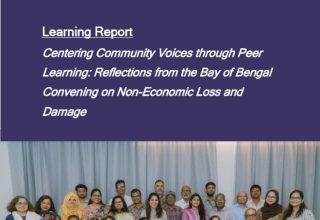
Learning Report | Centering Community Voices through Peer Learning: Reflections from the Bay of Bengal Convening on Non-Economic Loss and Damage
This report synthesizes the key findings and outcomes of each session of the “Bay of… -
Event Report | Youth Voices for Climate Resilience 2025 : Youth-led Policy Dialogue
Bangladesh stands at the frontline of climate impacts, where shifting rainfall patterns, s… -
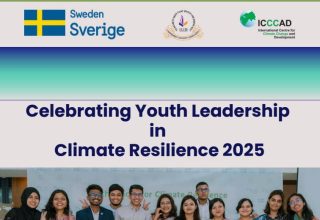
Event Report | Celebrating Youth Leadership in Climate Resilience 2025
On 19 October 2025, at the Multipurpose Hall of Independent University, Bangladesh (IUB), … -
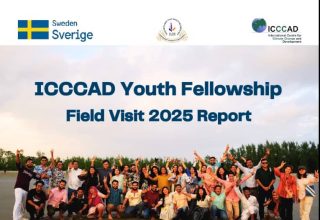
Field Visit Report | ICCCAD Youth Fellowship-2025
The ICCCAD Youth Fellowship is a flagship initiative under the project “Capacity Strengthe…
Load More By ICCCAD
-

Valuing a values-based approach for assessing loss and damage
Anthropogenic climate change is causing widespread losses and damages to what people value… -

Eight ways Asia is using nature to adapt to the climate crisis
The Asia-Pacific region is no stranger to climate change. In just the last few months, it … -
Loss and damage finance should apply to biodiversity loss
Global biodiversity loss has been disproportionately driven by consumption of people in ri… -
Shaping a resilient future in response to COVID-19
Science today defines resilience as the capacity to live and develop with change and uncer… -
Locally led adaptation is key to ending deforestation
Despite global pledges to end deforestation, forest loss continues. Focusing on mangrove f… -
A low-carbon and hunger-free future for Bangladesh: An exante assessment of synergies and trade-offs in different transition pathways
Feeding and nourishing a growing global population in Bangladesh is a major challenge in a…
Load More In Journal Article
Check Also
The National Framework and Action Plan for Locally Led Adaptation in Bangladesh
The Bangladesh National Adaptation Plan mandates the creation of a framework for climate a…