How STRENGTH Grants Empowered Young Researchers to Bring Local Perspectives on Loss and Damage
Climate change is no longer a distant threat but an unfolding reality, with frontline communities experiencing escalating losses and damages that exceed the limits of adaptation. While economic losses such as damage to infrastructure, livelihoods, and assets are increasingly documented, NELD, including the erosion of culture, identity, social cohesion, health, dignity, and ecosystems, remains under-recognized, difficult to measure, and inadequately reflected in policy and financing mechanisms. Yet these losses carry profound implications for climate justice, resilience, and human well-being.
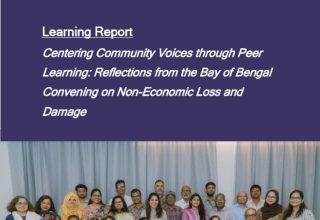
This report examines the role and impact of capacity-building grants in strengthening understanding, research practice, and advocacy on L&D, with a particular focus on non-economic loss and damage. It documents lessons learned and emerging good practices from the Project titled ‘Strengthening Loss and Damage Response Capacity in the Global South (STRENGTH)’. A special capacity-building grant of STRENGTH supported ten MSc- and PhD-level researchers across Bangladesh, Nepal, Senegal, and Vanuatu to undertake in-depth research on L&D. The initiative aimed not only to generate credible, context-specific evidence but also to build the skills, confidence, and networks of early-career researchers from climate-vulnerable regions, enabling them to meaningfully engage in national and global L&D processes. The grants supported one-year, mixed-methods, participatory research projects that combined qualitative and quantitative approaches, including key informant interviews, focus group discussions, participatory reflection sessions, and narrative documentation, complemented by desk-based policy and literature reviews. Capacity building was embedded throughout the research process through technical guidance, mentoring, structured reflection, and collective learning sessions. The approach prioritized ethical, inclusive, and gender responsive practices, ensuring the meaningful participation of women, youth, Indigenous peoples, and marginalized groups.
Collectively, the research outputs contributed valuable insights into how economic and noneconomic losses are experienced, perceived, and managed at community and local government levels. Findings highlighted the gendered dimensions of loss, the importance of lived values in assessing L&D, sector-specific impacts in agriculture and freshwater aquaculture, and gaps in how local governments recognize and prioritize climate-induced losses in planning and budgeting. The initiative also strengthened grantees’ conceptual and practical understanding of L&D, enabling them to link field-level evidence to broader debates on vulnerability, exposure, coping capacity, and climate justice.
Beyond research outputs, the initiative opened pathways for academic growth, policy engagement, publication, and professional networking. Grantees reported improved research quality, enhanced methodological skills, increased confidence in engaging with policymakers and practitioners, and expanded visibility in national and international climate forums. Several research outputs are being developed into policy briefs and academic publications, with longer term aspirations among grantees to continue contributing to L&D research and practice. The report also identifies key limitations encountered during implementation, including financial constraints, data access challenges, and the need for more advanced training and sustained mentorship. Based on grantee feedback, recommendations include strengthening methodological training on L&D, expanding mentorship and peer-to-peer learning opportunities, increasing grant size, improving data access support, and establishing alumni networks to sustain long-term engagement in the L&D space. Overall, the STRENGTH capacity-building grant initiative demonstrates how strategic grant making can bridge the gap between community level experiences and global L&D discourse. By investing in early-career researchers from the Global South, the STRENGTH Capacity Building initiative contributes to more inclusive, evidence based, and justice-oriented L&D narratives and policies.
The Full Report Available Here [PDF]