Loss and Damage (L&D) has emerged as a critical pillar of global climate action, supported by an emerging, dedicated financing stream. While the scale of L&D financing is far below what may be required, fundamental questions remain about how this financing can effectively minimise losses and damages at local climate frontlines. Recognising the limits of past and ongoing adaptation efforts, this paper examines the role of emerging L&D finance beyond risk management or reduction in transforming systems that predispose vulnerable groups to losses and damages. Drawing on empirical research from local cases in three climate frontline countries, Bangladesh, Nepal, and Vanuatu, we explore how L&D financing can go beyond risk reduction or compensation to address structural vulnerabilities and deliver climate justice. Findings reveal gaps, as current adaptation and disaster risk reduction efforts fail to build systems capacity and prevent escalating, irreversible, and unavoidable losses and damages. Given the systemic nature of climate impacts, increasing financial flows alone does not guarantee a reduction in losses and damages unless funds are directed toward dismantling systemic barriers that predispose communities to losses and damages. The paper argues that L&D finance must support more systemic or transformational responses, such as planned relocation, cultural restoration, and gender-responsive interventions, while ensuring local ownership and embedding equity and accountability in governing the finance. We call for a fundamental shift in thinking about how we design global-to-local finance architecture, emphasising the need for anticipatory, participatory, and justice-oriented approaches.
Publication Link The Full Publication Available Here [PDF]Home Publications Journal Article Journal Article | Loss and damage financing for climate justice and transformation: local insights from the climate frontline
-
STRENGTH Insights Webinar Series: Delivering Loss and Damage Local Insights for Global Action
We are pleased to announce a three-part webinar series under the STRENGTH project, focusin… -

Tackling climate loss and damage: why COP29’s unmet agendas can’t be ignored
The climate crisis is no longer a distant threat. It is a lived reality for millions aroun… -

Event Report | South-South Collaboration on Addressing Loss and Damage
As climate change intensifies, countries in the Global South are experiencing disproportio… -

Inclusion of Loss and Damage as a Subgoal in the New Collective Quantified Goal (NCQG)
The policy brief demonstrates how incorporating Loss and Damage (L&D) into the New Col… -

Remembering and honoring a champion of loss and damage
Saleemul Huq devoted his life’s work to advocating the world’s most climate-vulnerable communities
Saleemul Huq, an expert in the field of climate change, environment and development, devot… -

Call for application for VFL Bangladesh
We are excited to announce a unique opportunity for storytellers and advocates to particip…
Load More Related Articles
-
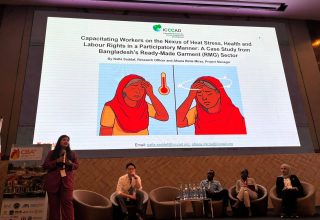
Communities at the Centre: Reflections from the 20th Community-Based Adaptation Conference
Being one of the 400 participants from 65 countries at the 20th Community-Based Adaptation… -
Climate Governance Through a Justice Lens in Bangladesh
This policy brief draws lessons from the Governance for Climate Resilience (G4CR) initiati… -
Strength Capacity Bridging Grants
How STRENGTH Grants Empowered Young Researchers to Bring Local Perspectives on Loss and Da… -
A Case Study of Navigating the Just Transition: DBL Group’s Integrated Approach to Climate Resilience in the Ready-Made Garment (RMG) Sector
This case study examines DBL’s adaptive and pioneering role in making the RMG sector… -
The National Framework and Action Plan for Locally Led Adaptation in Bangladesh
The Bangladesh National Adaptation Plan mandates the creation of a framework for climate a… -
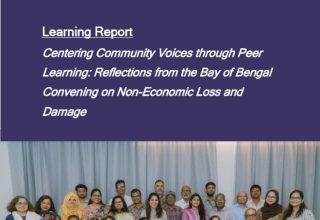
Learning Report | Centering Community Voices through Peer Learning: Reflections from the Bay of Bengal Convening on Non-Economic Loss and Damage
This report synthesizes the key findings and outcomes of each session of the “Bay of…
Load More By ICCCAD
-

Valuing a values-based approach for assessing loss and damage
Anthropogenic climate change is causing widespread losses and damages to what people value… -

Eight ways Asia is using nature to adapt to the climate crisis
The Asia-Pacific region is no stranger to climate change. In just the last few months, it … -
Loss and damage finance should apply to biodiversity loss
Global biodiversity loss has been disproportionately driven by consumption of people in ri… -
Shaping a resilient future in response to COVID-19
Science today defines resilience as the capacity to live and develop with change and uncer… -
Global recognition of the importance of nature-based solutions to the impacts of climate change
According to the World Economic Forum (2020) Global Risks Report, failure to mitigate and … -
Locally led adaptation is key to ending deforestation
Despite global pledges to end deforestation, forest loss continues. Focusing on mangrove f…
Load More In Journal Article
Check Also
Climate Governance Through a Justice Lens in Bangladesh
This policy brief draws lessons from the Governance for Climate Resilience (G4CR) initiati…