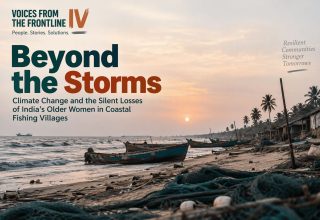
Fishing communities in Cox’s Bazar, Bangladesh face climate-induced loss and damage through increasingly unpredictable conditions at sea, declining fish catches, coastal erosion, displacement, and growing pressure on traditional livelihoods. This is the third of the “Voices from the Frontline (Phase IV)” stories by ICCCAD, supported by the Climate Ambition Support Alliance (CASA) / DAI Global.
For generations, Khaleque Mia’s family depended on the Bay of Bengal for survival. Born and raised in Somitipara, Ward-1, Cox’s Bazar district Khaleque, 42, learned the rhythms of the sea from his father and grandfather. Fishing was more than a livelihood. It was his identity, culture, and continuity. Yet, over the past decade, the waves that once carried life now brought uncertainty, loss, and danger.
Different levels of vulnerabilities induced from climate crisisies are creating pressure on the life and livelihoods of the fishermen communities. For Khaleque, it’s not exclusive too. More than ten years ago, a storm struck unexpectedly, claiming his father’s life. There was no warning, no preparation. It was the first harsh lesson for Khaleque, that climate change was not a distant theory but a daily threat. Khaleque realises that, since then, storms have become more frequent and erratic, rainfall patterns have become unpredictable, and the ocean has warmed and become more volatile. Fish, once plentiful near the coast, have migrated further offshore, forcing fishermen like Khaleque to spend longer days at sea, venturing into riskier waters with higher fuel costs and greater exposure to storms.
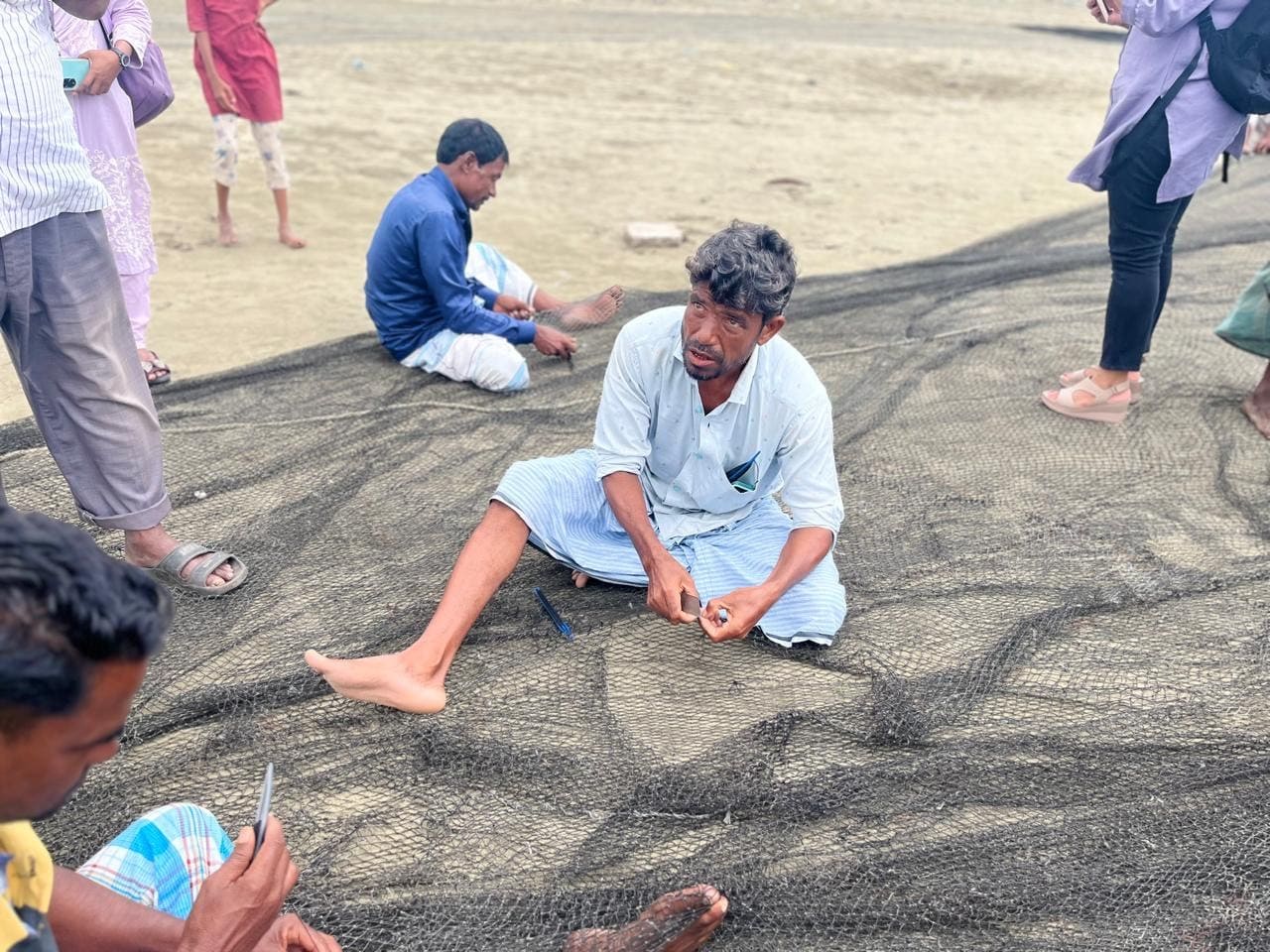
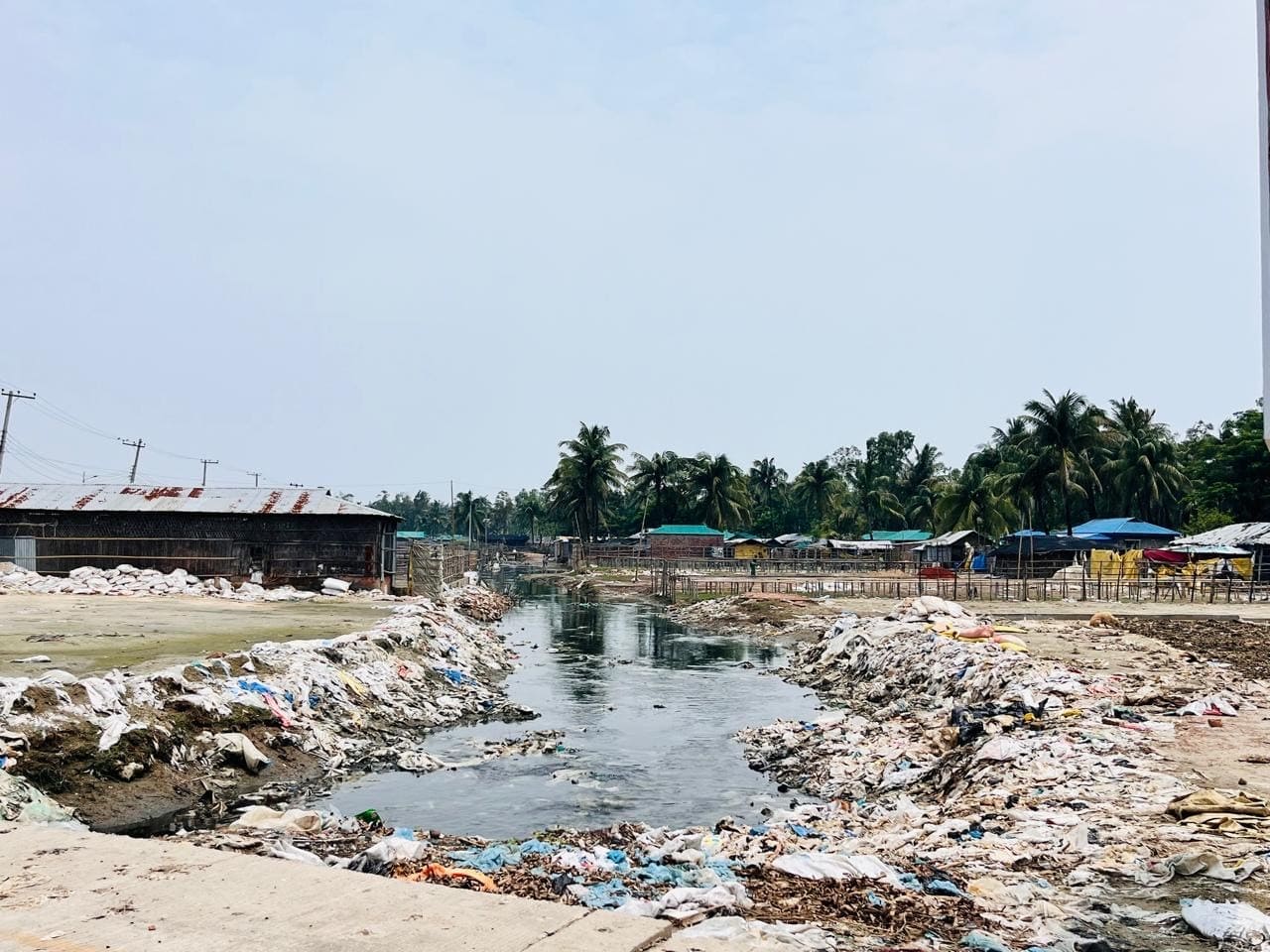
The impacts of climate change on Khaleque’s livelihood are stark. Nets that once returned with bountiful catches now come back filled with plastic wastes, bottles, sachets, food wrappers, and fragments of discarded containers. “We pull up the nets and see more trash than fish,” he says. “It is painful. The sea that sustained us is now filled with debris, choking not only our livelihoods but our hope.” This marine litter compounds the effects of climate change, increasing economic pressure on already vulnerable families. Each trip demands more fuel, more repairs, and more borrowed money, often leaving fishermen trapped in a cycle of debt. Survival has become a daily negotiation between risk, necessity, and uncertainty.
Repeated floods and coastal erosion have not spared Khaleque’s home. His family endured multiple displacements, finally relocating in 2024 to the Khurushkul Special Shelter Project, Bangladesh’s largest government-built resettlement complex for families displaced by climate change. The apartments protect them from storm surges and floods, yet they have brought new challenges. Cramped living spaces, loss of traditional coastal practices, and weakened community bonds have introduced psychological and social strains that cannot be measured in economic terms. For Khaleque, adaptation is incomplete. Safety comes at the cost of identity, dignity, and connection to the sea that once defined his family’s way of life.
The story of Khaleque illustrates the dual dimensions of loss and damage in the context of climate change. Economic losses are immediate and tangible: declining fish stocks, rising operational costs, and accumulated debt. Non-economic lossessuch as grief, cultural erosion, disrupted livelihoods, and diminished social cohesion—are equally profound, shaping the lived experience of climate vulnerability. Khaleque’s children grow up disconnected from the sea, while adults navigate a new reality where survival requires them to negotiate both environmental risks and social displacement.
Adaptation strategies have provided some relief, but they also reveal their limitations specifically for people like Khaleque. Early warning systems, shelters, and NGO support provide protection and guidance and mostly the access to different services; however, they do not restore ancestral livelihoods or address cultural loss. Khaleque and other fishermen try to coordinate fishing schedules, share information about safe routes, and occasionally diversify their income sources. Some families leave fishing entirely or migrate temporarily, while others continue to battle the sea, despite its volatility. These strategies demonstrate resilience, but they also highlight gaps in systemic support for frontline communities. Adaptation cannot merely mitigate physical risk; it must address economic, social, and cultural dimensions of loss to foster meaningful resilience.
Khaleque’s experience also illuminates lessons for building community resilience. First, adaptation must be holistic: physical protection through shelters or early warning systems alone is insufficient if livelihoods, culture, and social networks are disrupted. Second, support systems must be timely, context-specific, and locally accessible, including financial assistance, insurance, and livelihood diversification tailored to environmental realities. Third, the voices of frontline communities must be central in policy-making and international climate negotiations, ensuring that solutions reflect lived experience rather than abstract models. Finally, resilience requires recognition of non-economic losses such as identity, dignity, and mental health as equally critical to survival as material resources.
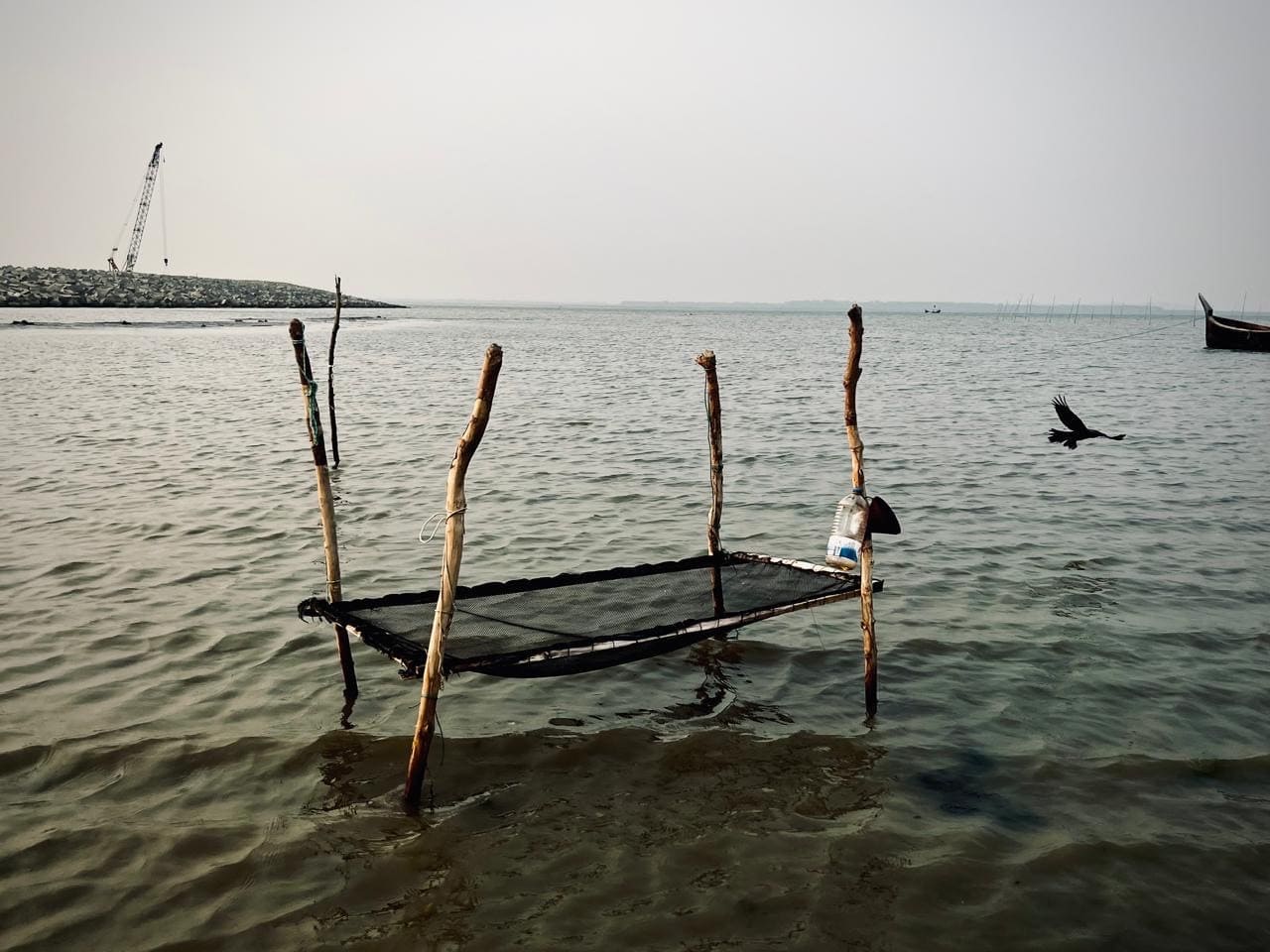
His story is a microcosm of the broader crisis facing coastal communities in Bangladesh and across the Global South. Rising seas, erratic storms, and polluted waters are simultaneously dismantling ecosystems, livelihoods, and cultural continuity. Yet, amidst these challenges, Khaleque and his community persist. They adapt, innovate, and continue to fish, bearing the physical, emotional, and economic burden of climate change on behalf of those who have contributed least to the crisis.
Khaleque’s narrative highlights the importance of integrating local knowledge with policy support. Communities like his possess valuable insights into the rhythms of the sea, seasonal patterns, and adaptive strategies that can inform sustainable interventions. Their experiences provide evidence for designing climate policies that prioritize equity, justice, and long-term resilience. Loss and Damage funds, when directed effectively, can empower these communities to rebuild not only infrastructure but also livelihoods, social cohesion, and cultural identity.
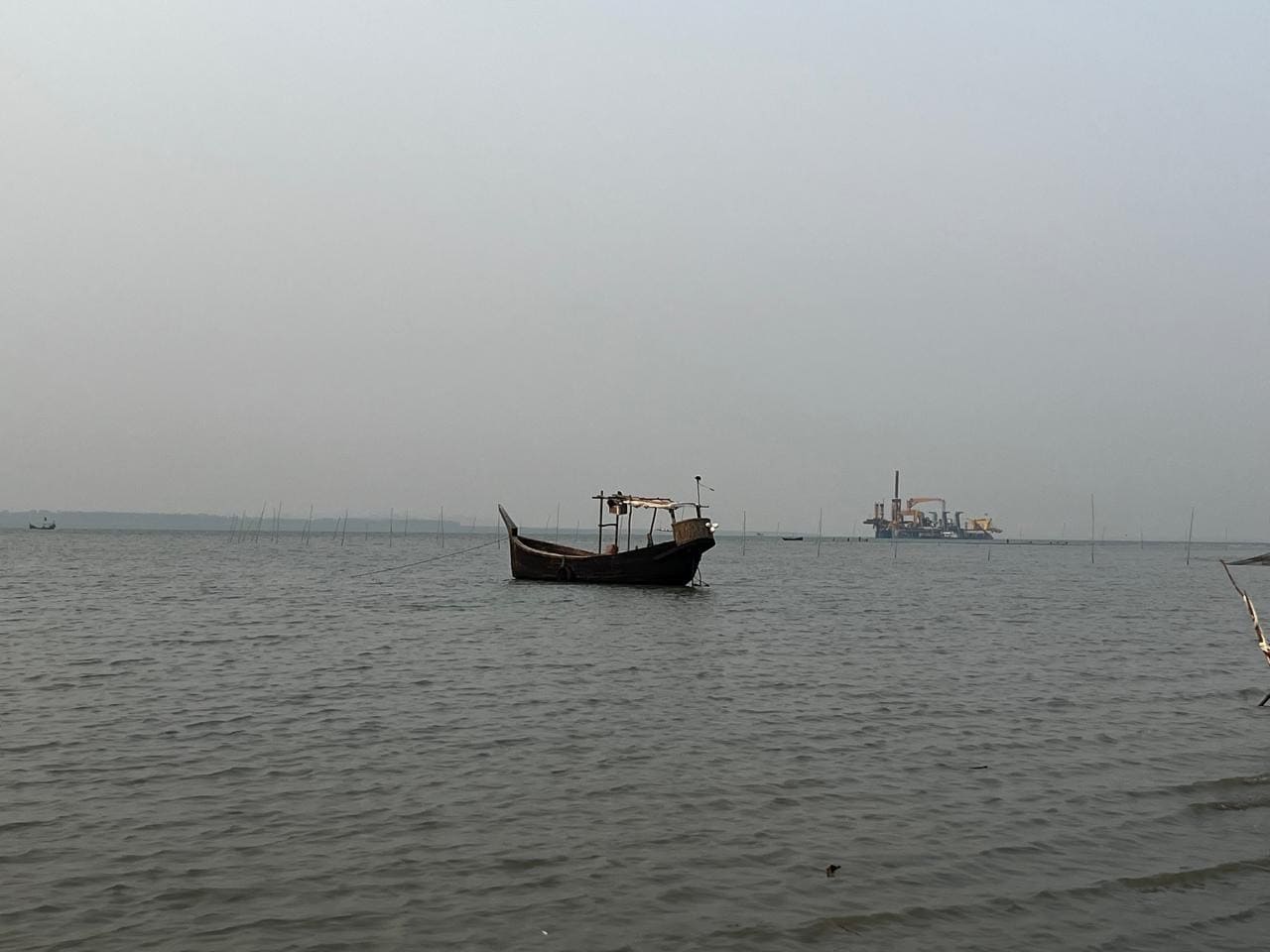
In reflecting on his journey, Khaleque emphasizes a plea for recognition and action. “We are on the frontline,” he says. “We did not cause climate change, yet we suffer its worst consequences. Help us restore our sea, our livelihoods, and our dignity. Help us survive, and not just survive, but live with hope.”
Between Waves: Khaleque’s Battle at the Sea captures the lived realities of climate-induced loss and damage, offering critical lessons for resilience-building. It underscores that adaptation is not merely technical or structural; it is deeply human. Resilience emerges from safeguarding both material and intangible assets: livelihoods, heritage, community, and hope. Khaleque’s story reminds us that climate change is not an abstract challenge it is a daily struggle for survival, identity, and dignity for millions on the frontlines.
About the Interviewee
Khaleque Mia is a 42-year-old fisher from Somitipara, Ward-1, Cox’s Bazar, Bangladesh. Coming from a family that has depended on the Bay of Bengal for generations, fishing is closely connected to his livelihood, identity, and cultural heritage. His experiences of changing fishing conditions, declining catches, storms, coastal erosion, displacement, and relocation reflect both the economic and non-economic dimensions of climate-induced Loss and Damage affecting coastal fishing communities.
About the Interviewer
Farah Anzum is the Bangladesh Country Lead at GSCC