Participating in the 2nd International Climate Camp in Kathmandu and Pokhara, Nepal, was more than attending another climate event. It was an opportunity to witness how bringing together diverse perspectives can spark meaningful conversations, shared learning, and lasting connections among climate enthusiasts. As climate impacts become more frequent and severe, it is increasingly evident that no country can address this crisis alone. This shared reality demands collective action across borders, sectors, and generations. In this context, ICC 2026 brought together youth leaders, researchers, students, practitioners, and environmental advocates to exchange ideas, learn from one another’s experiences, and explore solutions beyond national boundaries.
Despite representing different countries, cultures, and professional backgrounds, one message remained constant throughout the camp: South Asia’s climate challenges are deeply interconnected, and so must be our solutions.
Climate Politics: Beyond Policies and Negotiations
Before joining the Climate Politics group, many of us associated climate governance with international negotiations and policy forums. However, the conversations quickly revealed that climate politics influences much more than diplomatic discussions. It highlighted how political decisions shape access to climate finance, adaptation planning, and disaster preparedness. Although every country represented different priorities and experiences, we found ourselves returning to remarkably similar concerns: equitable climate finance, stronger governance, and ensuring young people have a meaningful place in climate decision-making. The conversations reminded us that shared challenges require shared learning and continued dialogue.
Nature-based Solutions: Learning from the Ecosystems that Sustain Us
One of the most inspiring conversations centered on Nature-based Solutions (NbS), reminds us that some of the most effective climate solutions already exist within the ecosystems that surround us. Across the region, forests, wetlands, mangroves, rivers, and mountain ecosystems provide essential services that reduce disaster risks, support biodiversity, and sustain millions of livelihoods. As participants shared examples from their own countries, it became evident that although ecosystems vary across the region, the principles of NbS remain remarkably similar. Whether restoring mangrove forests in Bangladesh, protecting fragile mountain ecosystems in Nepal, or improving watershed management elsewhere in the region, successful adaptation depends on working alongside nature rather than against it. One lesson that resonated throughout the session was that restoring ecosystems alone is not enough. Nature-based Solutions are most effective when local communities, traditional knowledge, supportive policies, and long-term investment come together.
Renewable Energy: Powering a Sustainable South Asia
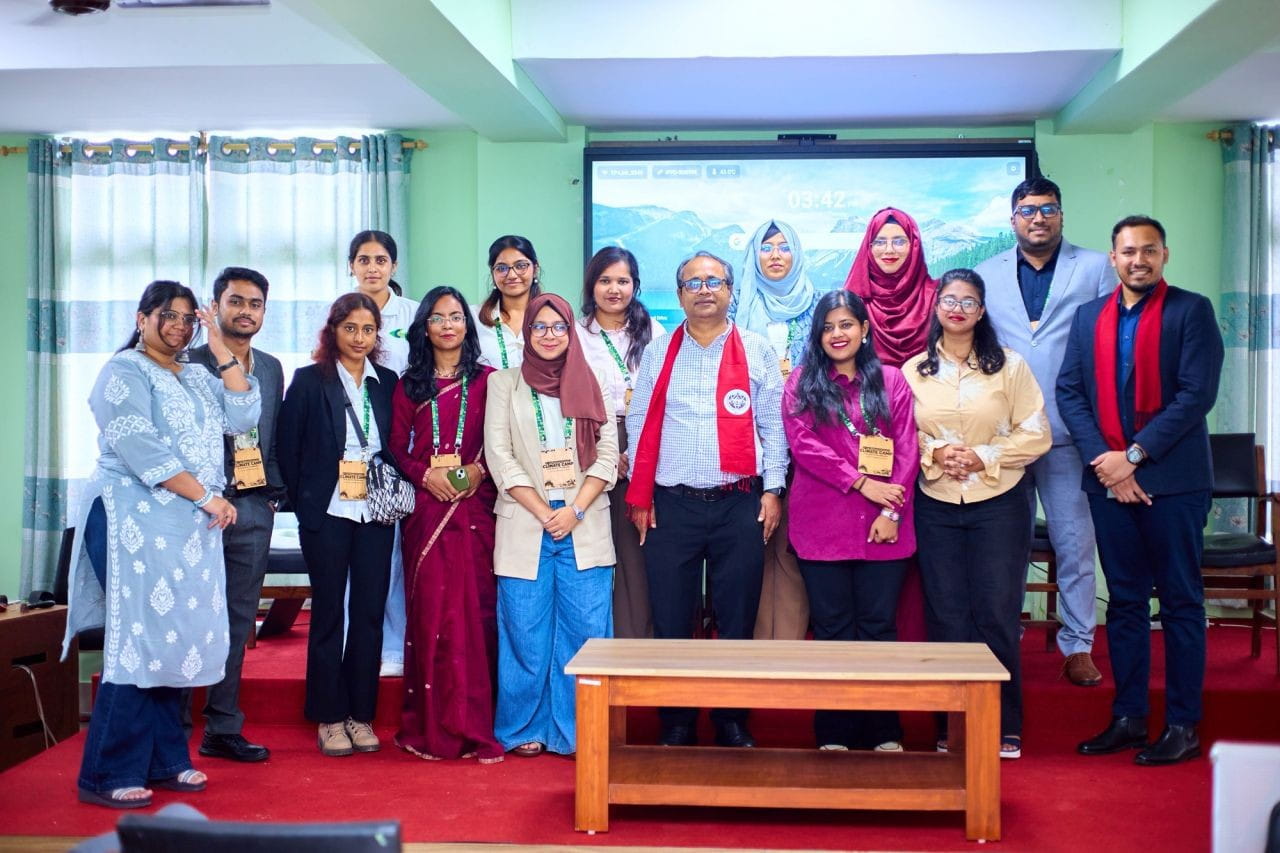
South Asian countries, , account for almost 9-10% of global carbon emissions. Nevertheless, renewable energy solutions have been the talk of the town, underscoring the need to accelerate a just and inclusive energy transition. As the region attempts to meet growing energy demands while reducing greenhouse gas emissions, renewable energy has become central to climate mitigation and sustainable development, as the discussions emphasized. Not just for industrial purposes, the renewable energy approach can be integrated into household-level activities. Expanding clean energy is not only about cutting emissions but also about improving energy security, creating green jobs, and ensuring equitable access to affordable energy.
Sustainable Water Management: Securing a Climate-Resilient Future
Equally significant was Sustainable Water Management, which addressed one of the region’s most pressing climate adaptation priorities. Climate change is disrupting water availability through floods, droughts, erratic rainfall, and declining water quality. With the exponentially growing population, there is an urgent need to know how integrated water management, ecosystem-based approaches, and community participation can strengthen resilience while supporting agriculture, livelihoods, biodiversity, and public health. In this regard, effective water governance and feasible infrastructure, considering geographic locations, are fundamental to both climate adaptation and long-term sustainable development.
Action Against Pollution: A Shared Airshed, A Shared Burden
Participants from Bangladesh, India, Nepal, and Pakistan compared notes; one reality became impossible to ignore: the air, it is a transboundary issue. The same haze that blankets one capital drifts into the next, making South Asia home to some of the most polluted cities in the world. Participants noted how Dhaka and Delhi routinely trade places near the top of global pollution rankings. It was discussed that in 2025, Bangladesh was identified as the second most polluted country in the world. Participants brought alarming findings to the discussion, focusing on both physical and mental health: beyond damaging the lungs and heart, prolonged exposure to polluted air is increasingly linked to anxiety, depression, and cognitive decline, with children and the elderly bearing the heaviest burden. What made the conversation distinctly regional, however, was the recognition that a significant share of the pollution choking each city originates beyond its own borders. No country can clean its air alone; doing so demands a genuinely collaborative effort.
Youth Leadership and Advocacy: From Participants to Changemakers
The Youth Leadership and Advocacy session pointed toward the solution and, fittingly, brought the camp’s purpose full circle. Recognizing that South Asia is among the youngest regions in the world, participants explored how young people can move from awareness to influence: by generating local data, holding institutions accountable, shaping public narratives, and translating climate science into community action. The reflections returned repeatedly to a shared conviction that meaningful leadership requires access to decision-making spaces, mentorship, and cross-border networks. ICC 2026 itself embodied this idea, turning a room of individual attendees into a connected community of young climate leaders equipped to carry these lessons home.
Conference Connecting to Reality
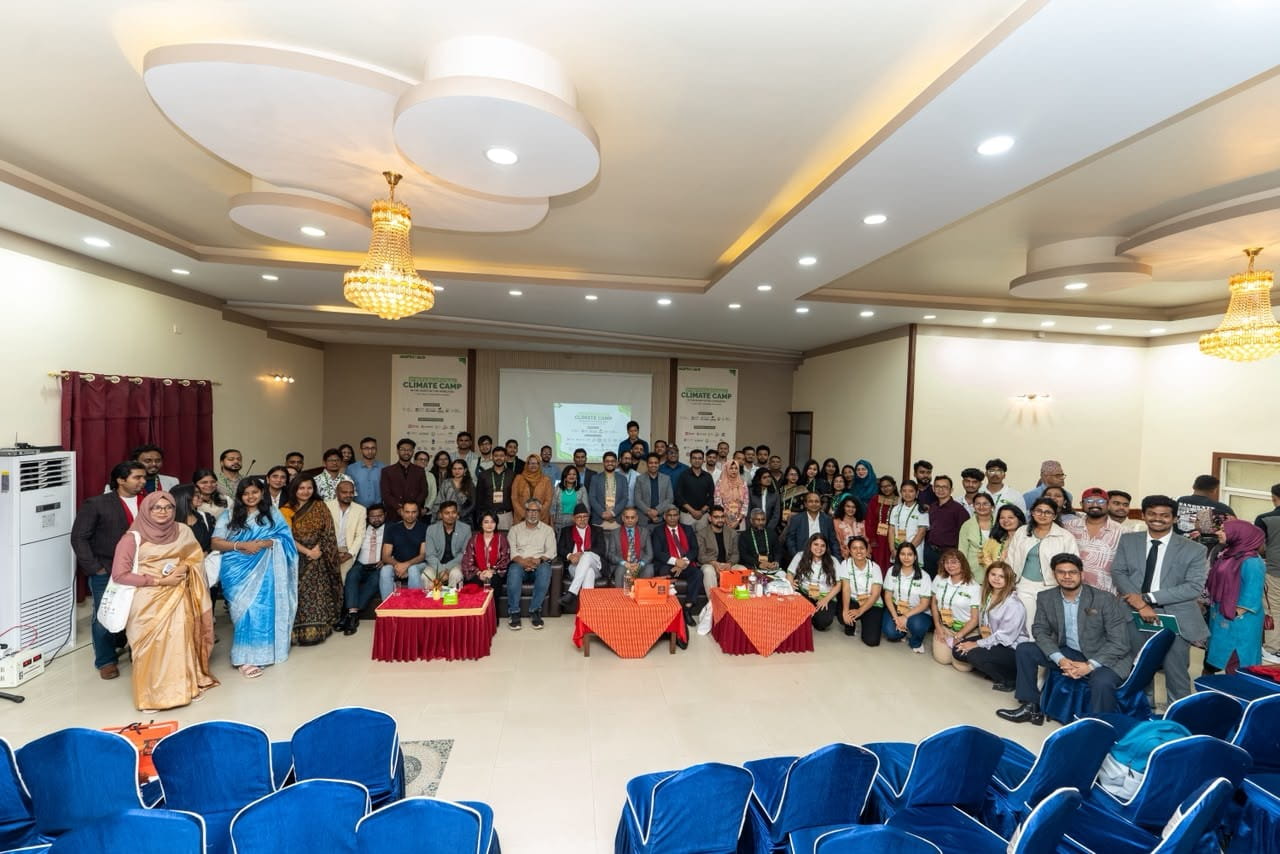
The 2nd International Climate Camp, held in the first week of July 2026, highlighted the importance of cross-country collaboration and regional frameworks in South Asia, where geography, ecosystems, rivers, and natural resources are deeply interconnected. This regional interconnectedness became even more tangible when Nepal experienced devastating flash floods on 26 August 2026, following an ice and rock avalanche in the Himalayan region (Nepal-China border). The disaster showed how climate and environmental risks can transcend national boundaries and affect interconnected communities and systems. It resonates with a key camp lesson: regional networks facilitate dialogue, knowledge exchange, and enhance coordination, preparedness, emergency response, and mutual support. Stronger regional policies, early-warning systems, institutional coordination, and mechanisms for timely assistance among neighboring countries can therefore play an important role in reducing the impacts of climate-related disasters across South Asia.
Way Forward
The International Climate Camp 2026 demonstrated that climate solutions cannot succeed in isolation. Whether the focus is climate politics, nature-based solutions, renewable energy, sustainable water management, pollution, or youth advocacy, every theme is interconnected and requires coordinated efforts across disciplines, sectors, and national boundaries. While the camp lasted only five days, the ideas, connections, and shared commitment it fostered have the potential to create lasting impact through continued exchanges, joint initiatives, and shared learning opportunities. As we returned to our homeland and started working towards our professional goals, the real success of the camp will be measured by how effectively we transform these shared experiences into collective action that strengthens resilience across our communities. As one reflection from the camp perfectly captures, “We arrived as participants from different countries; we left as one community with a shared mission.”
About the Authors
Bushra Anjum works as Operations and Monitoring Officer under the Locally Led Adaptation (LLA) Programme at the International Centre for Climate Change and Development (ICCCAD).
Nafia Saddaf works as Research officer under the Just Transition Programme at International Centre for Climate Change and Development (ICCCAD)
Samiha Saleha works as Research Officer under the Locally Led Adaptation (LLA) programme at the International Centre for Climate Change and Development (ICCCAD).